What is Arbitration?
Arbitration is an alternative dispute resolution (ADR) mechanism that allows parties to resolve disputes outside the traditional court system. It is particularly favored in commercial and contractual disputes due to its efficiency, confidentiality, and cost-effectiveness. In India, arbitration is primarily governed by the Arbitration and Conciliation Act, 1996, which provides a robust legal framework for domestic and international arbitration.

BENEFITS OF ARBITRATION
Time-Efficient
Arbitration proceedings are generally faster than traditional court litigation, often concluding within months rather than years. The fast-track procedure in India further ensures quicker dispute resolution.
Cost-Effective
Arbitration helps reduce legal costs by minimizing court fees, procedural delays, and lengthy hearings. It also allows parties to choose cost-effective procedures tailored to their needs.
Confidentiality
Unlike court cases, arbitration proceedings remain private, protecting sensitive business information and maintaining confidentiality in commercial disputes.
Enforceability & Global Recognition
Arbitral awards are legally binding and internationally enforceable under the New York Convention, making arbitration an attractive option for cross-border disputes.
ARBITRATION AT CADR
At the Centre for Alternative Dispute Resolution (CADR), we offer a structured, efficient, and impartial framework for resolving disputes. Our panel of experienced arbitrators specializes in various legal and commercial fields, ensuring fair and high-quality adjudication. We adhere to globally recognized arbitration standards, making our awards enforceable both in India and internationally. Our cost-effective and time-efficient processes provide a seamless alternative to traditional litigation, allowing parties to resolve disputes swiftly and confidentially. With CADR, you can expect professionalism, integrity, and a commitment to delivering just and effective resolutions.

Expert & Impartial Arbitrators
Our panel consists of highly experienced professionals specializing in various legal and commercial fields, ensuring fair and high-quality dispute resolution.
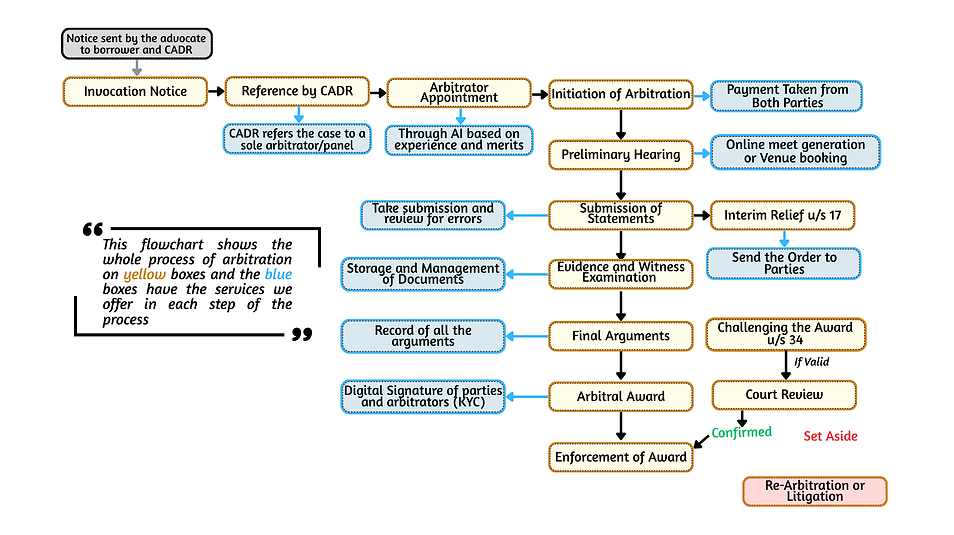
Process